Transition Metal Free Stannylation of Alkyl Halides: the Rapid Synthesis of Alkyltrimethylstannanes
中文 / Bilingual · English version
Songyi Li, ${}^{\text{ § }}$ Chang Lian, ${}^{\text{ § }}$ Guanglu Yue, Jianning Zhang, Di Qiu,* and Fanyang Mo*
Cite This: J. Org. Chem. 2022, 87, 4291-4297
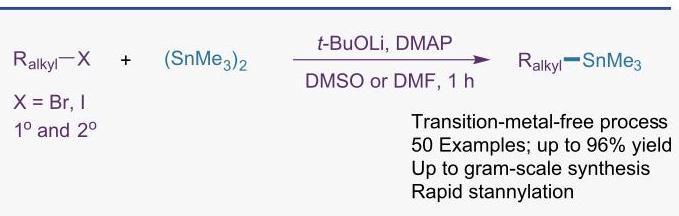
ABSTRACT: A transition metal free stannylation reaction of alkyl bromides and iodides with hexamethyldistannane has been developed. This protocol is operationally convenient and features a rapid reaction and good functional group tolerance. A wide range of functionalized primary and secondary alkyl and benzyl trimethyl stannanes are prepared in moderate to excellent yields. The success of the gram-scale procedure and tandem Stille coupling reaction has allowed this protocol to demonstrate potential for application in organic synthesis. Both experimental and theoretical studies reveal the mechanistic details of this stannylation reaction.
1. INTRODUCTION
The Stille cross-coupling reaction using organotin compounds as the coupling partners has demonstrated great applications in organic synthesis and other fields. ${}^{1 - 5}$ In particular, in the synthesis of functional materials and polymers, the Stille cross-coupling reaction features apparent advantages. ${}^{6,7}$ Apart from the widely applied arylstannanes, corresponding alkylstannanes and benzylstannanes have also been extensively explored as versatile building blocks in carbon-carbon bond-forming reactions. ${}^{8 - {14}}$ In particular, alkyl and benzyl trimethylstan-nanes have been utilized not only as important building blocks for $\mathrm{C} - \mathrm{C}$ bond formation but also in selectively constructing $\mathrm{C} - \mathrm{O}$ and $\mathrm{C} - \mathrm{X}$ bonds. ${}^{9,{15} - {19}}$ The development of the synthetic methods for various organotin derivatives has become a crucial issue. To date, compared with those of arylstannanes, the synthetic routes toward alkylstannanes are very limited. Traditional methods for accessing these reagents involve the nucleophilic substitution of alkyl metallic reagents with trialkyltin chloride. ${}^{{20} - {24}}$ Despite the synthetic utility, this method suffers from several limitations, such as rigorous reaction conditions, poor functional group tolerance, etc. Additionally, several other reactions for accessing alkylstan-nanes have been infrequently reported, including the carbene insertion of diazo compounds with ${\mathrm{{Bu}}}_{3}\mathrm{{SnH}},{}^{{25} - {28}}$ as well as the addition of alkenes with ${\mathrm{{Bu}}}_{3}\mathrm{{SnH}}.{}^{{29} - {31}}$ Alternatively, Pd-catalyzed stannylation of organohalides with ditin compounds represents a reliable route for synthesizing stannanes (Figure 1a). ${}^{{32},{33}}$ However, these methods are effective for only primary benzyl halides, but not for general alkyl counterparts.
Although some stannylation reactions have been established, it is still highly desirable to explore transition metal free approaches to access these synthetically valued building blocks. In 2017, Wang disclosed a stannylation of N-tosylhydrazones with ${\mathrm{{Bu}}}_{3}\mathrm{{SnH}}$ under transition metal free conditions. ${}^{34}$ This protocol is mainly suitable for synthesizing benzylstannanes. On the contrary, the transition metal free alkyl borylation process has seen great progress in the past five years. ${}^{{35},{36}}$ On the basis of our recent synthetic investigations of transition metal free borylation, ${}^{37}$ a program of study was undertaken to structurally, kinetically, and computationally characterize transition metal free stannylation of a wide range of alkyl halides (Figure 1b).
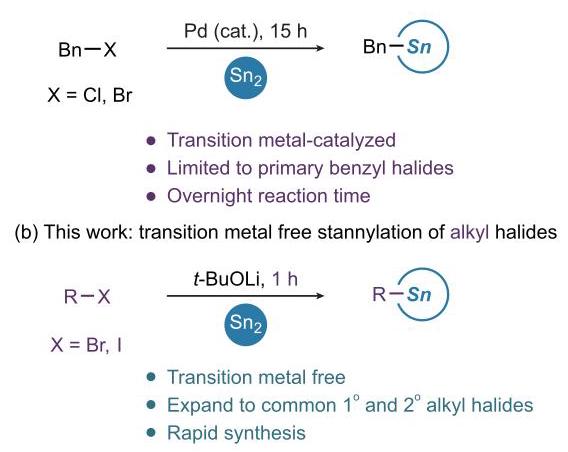
Figure 1. Stannylation of alkyl halides.
2. RESULTS AND DISCUSSION
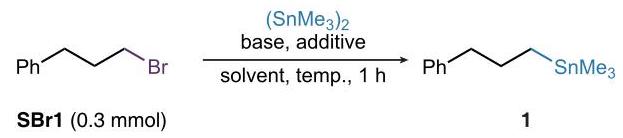
Development of the Reaction Conditions. At the outset, we have investigated this stannylation reaction of (3- bromopropyl)benzene SBr1 with hexamethyldistannane under transition metal free conditions (Table 1). To optimize the reaction conditions, we started by examining several representative bases (entries 1-3). Only the reaction using $t$ - BuOLi as a base afforded corresponding stannylated product 1 in 39% yield (entry 3). At the optimal reaction temperature, we found that a better yield was obtained at ${80}^{ \circ }\mathrm{C}$ (entry 4). The variation of an array of solvents indicated that DMSO as the solvent gave a yield slightly better than that with DMF (entries 6 and 7). Inspired by Jiao’s research, ${}^{38}$ as well as a suggested ${\mathrm{S}}_{\mathrm{N}}2$ mechanism (vide infra), the reaction with ${10}\mathrm{\;{mol}}\%$ DMAP added gave a superior result, providing 1 in 62% yield (entry 8). After the amount of DMAP had been optimized, the yield of 1 also increased to 71% upon addition of 0.8 equiv of DMAP (entries 8-10). Increasing the concentration did not further decrease the yield (entry 11). Furthermore, a series of differently substituted pyridines were evaluated as the additives, which proved to be less effective then DMAP (entries 12-14). Finally, the reaction with 1.4 equiv of ditin provided 1 in 92% yield (entry 15). A control experiment showed that $t$ -BuOLi was indispensable for this stannylation reaction (entry 16). For alkyl iodide substrates, we found that a prolonged reaction time at nearly room temperature is beneficial for this transformation.
Received: December 28, 2021
Published: March 8, 2022
Table 1. Optimization of the Reaction Conditions Using Alkyl Bromide SBr1 ${}^{a}$
| entry | base (equiv) | additive (equiv) | solvent (mL) | temp (℃) | yield (%) |
| 1 | ${\mathrm{{Et}}}_{3}\mathrm{\;N}\left( {1.5}\right)$ | - | DMF (2) | 30 | 0 |
| 2 | $t$ -BuOK (1.5) | - | DMF (2) | 30 | 0 |
| 3 | $t$ -BuOLi (1.5) | - | DMF (2) | 30 | 39 |
| 4 | $t$ -BuOLi (1.5) | - | DMF (2) | 80 | 52 |
| 5 | $t$ -BuOLi (1.5) | - | DMF (2) | 110 | trace |
| 6 | $t$ -BuOLi (1.5) | - | DMSO (2) | 80 | 53 |
| 7 | $t$ -BuOLi (1.5) | - | MeCN (2) | 80 | trace |
| 8 | $t$ -BuOLi (1.5) | DMAP (0.1) | DMSO (2) | 80 | 62 |
| 9 | $t$ -BuOLi (1.5) | DMAP (0.8) | DMSO (2) | 80 | 71 |
| 10 | $t$ -BuOLi (1.5) | DMAP (1.0) | DMSO (2) | 80 | 60 |
| 11 | $t$ -BuOLi (1.5) | DMAP (0.8) | DMSO (1.5) | 80 | 71 |
| 12 | $t$ -BuOLi (1.5) | 4-methylpyridine (0.8) | DMSO (1.5) | 80 | 69 |
| 13 | $t$ -BuOLi (1.5) | 4-phenylpyridine (0.8) | DMSO (1.5) | 80 | 59 |
| 14 | $t$ -BuOLi (1.5) | 2,2'-bipyridine (0.8) | DMSO (1.5) | 80 | 55 |
| ${15}^{b}$ | $t$ -BuOLi (1.5) | DMAP (0.8) | DMSO (1.5) | 80 | 92 |
| 16 | - | DMAP (0.8) | DMSO (1.5) | 80 | 0 |
${}^{a}$ Reaction conditions: SBr1 (0.3 mmol), ${\mathrm{{Sn}}}_{2}{\mathrm{{Me}}}_{6}$ (0.36 mmol,1.2 equiv). DMAP [4-(dimethylamino)pyridine], DMF (N, N-dimethylformamide), DMSO (dimethyl sulfoxide). Isolated yields are reported. ${}^{b}{\mathrm{{Sn}}}_{2}{\mathrm{{Me}}}_{6}$ (0.42 mmol,1.4 equiv).
With the optimized conditions in hand, we then surveyed the substrate scope of this stannylation reaction starting from a series of structurally diversified alkyl halides to obtain the corresponding alkylstannanes (Figure 2). We found that the stannylating efficiency of alkyl halides was greatly affected by the leaving properties of halogens. Phenyl propyl chloride, bromide, and iodide afforded corresponding products 1 in 23%, 92%, and 82% yields, respectively, under the reaction conditions. On this basis, we tried to use 3-phenylpropyl 4- methylbenzenesulfonate to obtain the corresponding alkyl-stannanes (1) in 59% yields. In view of the great importance of the heteroaromatic scaffold in pharmaceuticals, we synthesized trimethyl[3-(thiophen-2-yl)propyl]stannane 2 and 4-[3- (trimethylstannyl)propyl]pyridine 3 in good yields, which indicated that the heteroaromatic susbtrates were also suitable for this protocol. Continuously, a series of unactivated primary alkyl iodides/bromides were converted to the corresponding alkylstannanes in good to excellent yields (4-8). Highly volatile alkylstannanes 6 and 7 have been isolated in only discrete yields. Notably, the stannylation protocol demonstrated good functional group tolerance to various substituents, including methoxy (6), oxygen heterocycle (9), chloro (10), cyano (11), and alkenyl (12) groups. Notably, the ester group was hydrolyzed during the reaction to afford stannylative carboxylic acid derivative 13. To our delight, double stannylating product 14 starting from diiodoalkane has been obtained in 74% yield. Moreover, several alkylstannanes containing branched chains can be acquired in moderate to high yields (15 and 16). Alkylstannanes prepared from tetrahydro geranyl halides could be obtained in high yields (17). It is gratifying that this protocol has good applicability for both halides and pseudohalides. When using alkyl $p$ - toluenesulfonates as the substrates, moderate yields are afforded in some cases.
We then intentionally examine the functional group tolerance of the reaction. As exemplified by 18, 19, and 30, halogen atoms on the aromatic ring do not affect the reaction at all. Furthermore, we have modified the alkyl chain by using thiophenol, aniline, and phenol derivatives to obtain various alkyl halides. These heteroatom-containing alkylstannanes can be acquired in 44-85% yields (20-30). As expected, the stannylation has excellent functional group tolerance to both electron-withdrawing and electron-donating groups on the benzene ring, including phenyl (23), fluorine (24 and 30), trifluoromethyl (25), methyl sulfonate (26), acetaminomethyl (27), methylthio (28), and tert-butyl (29) groups. The stannylation reaction of natural product coniferyl alcohol derivatives was also successful, and the corresponding product 31 was isolated in 80% yield. The results for secondary halides are somewhat unsatisfactory (32 and 33), mainly due to their steric hindrance, in which corrsponding alkenes were observed as the elimination byproducts.
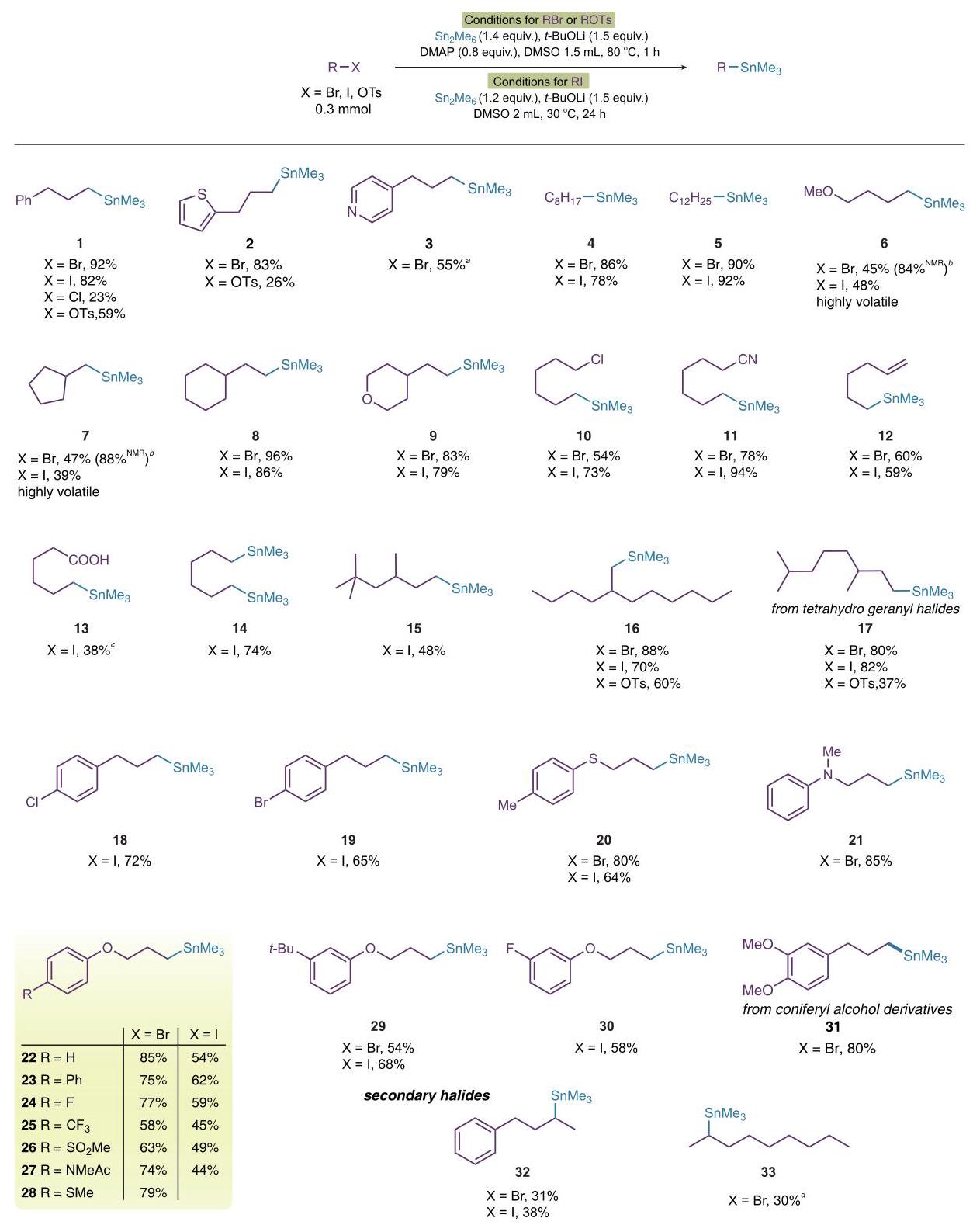
Figure 2. Substrate scope of alkyl halides. Reaction conditions for RBr or ROTs: alkyl bromide or alkyl p-toluenesulfonate (0.3 mmol, 1.0 equiv), hexamethyldistannane (1.4 equiv), t-BuOLi (1.5 equiv), DMAP (0.8 equiv), DMSO (1.5 mL), 80 ${}^{ \circ }\mathrm{C}$ , 1 h. Conditions for RI: alkyl iodide (0.3 mmol, 1.0 equiv), hexamethyldistannane (1.2 equiv), t-BuOLi (1.5 equiv), DMSO (2 mL), 30 ${}^{ \circ }\mathrm{C}$ , 24 h. Isolated yields are reported. ${}^{a}$ The reaction temperature was ${30}^{ \circ }\mathrm{C}$ . ${}^{b}\mathrm{{Te}}$ NMR yield was measured by using mesitylene as an internal standard. ${}^{\sigma }\mathrm{{Th}}$ is reaction was performed using methyl 6- iodohexanoate as the substrate. ${}^{d}$ The product was contaminated by (SnMe ${}_{3}$ ), which could not be removed by silica gel column chromatography. After silica gel column chromatography, product 33 mixed with ${\left( {\mathrm{{SnMe}}}_{3}\right) }_{2}$ was first isolated together, and then the yield of 33 was determined by ${}^{1}$ H NMR. DMAP = 4-(dimethylamino)pyridine. DMSO = dimethyl sulfoxide.
Next, the substrate scope for benzylic bromides was investigated. Overall, various benzyl bromides were rapidly converted into the corresponding alkylstannanes in moderate to high yields at room temperature (Figure 3). A range of functional groups, such as methyl (35 and 42), tert-butyl (36), halogen (37-39, 43, and 45), boronate (40), trifluoromethoxy (41), methoxy (44), and naphthyl (46) groups, were tolerated in this protocol. By comparison, the diminished efficiency of secondary benzyl bromides was probably due to steric hindrance effects (47 and 48). It is worth mentioning that the stannylation reaction of natural product veratrol derivatives and geranyl halides was smoothly carried out to afford 49 and 50.
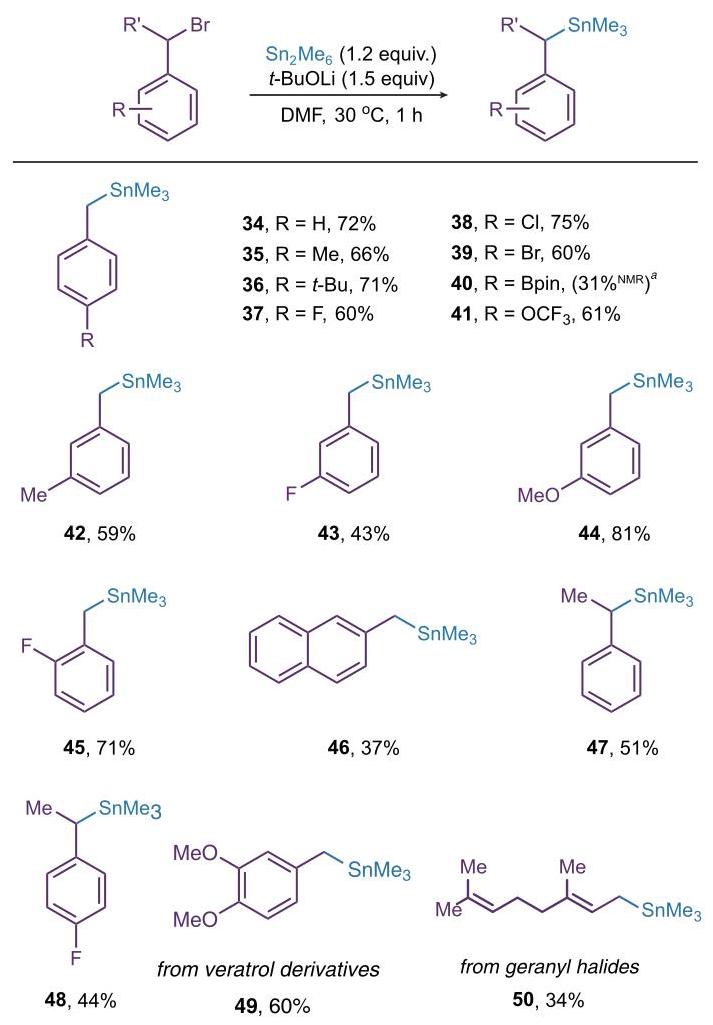
Figure 3. Substrate scope of benzyl bromides. Reaction conditions: benzyl bromide (0.3 mmol, 1.0 equiv), hexamethyldistannane (1.2 equiv), t-BuOLi (1.5 equiv), DMF (2 mL), 30 ${}^{ \circ }\mathrm{C}$ , 1 h. Isolated yields are reported. ${}^{a}$ The NMR yield was measured using mesitylene as an internal standard.
To demonstrate the practical application of this stannylation procedure, mild reaction condition-promoted stannylations of three alkyl halides were carried out on a gram scale to form the corresponding alkylstannanes 1,11, and ${34}\left( { \leq {1.37}\mathrm{\;g}}\right)$ (Figure 4). Although the yield of 11 is moderate, the gram-scale yields of phenylpropylstannane (1) and benzylstannane (34) are comparable to those of the 0.3 mmol-scale protocol.
In the next research, we performed application studies and mechanistic investigations (Figure 5). Although the Stille coupling reactions of benzylstannanes have rarely been documented, the Pd-catalyzed Stille reaction of 34 with bromobenzene is successfully achieved to provide biaryl derivative 51 in 63% yield (Figure 5a). As for the mechanism, there are many precedents through the process of tin-based radicals (especially trialkyltin radicals) in ${\mathrm{{Bu}}}_{3}\mathrm{{SnH}}$ -mediated transformation. ${}^{{39} - {42}}$ We therefore started looking for evidence of free radicals at first. A radical clock reaction was designed and performed with 6-iodohex-1-ene SI12 as the substrate. The result is that hex-5-en-1-yltrimethylstannane 12 was obtained as the only stannylated product, and cyclized stannylation compound ${12}^{\prime }$ was not detected at all (Figure 5b). Then, upon addition of a different amount of TEMPO or 1,1-diphenylethylene as the radical scavenger to this reaction mixture, no alkyl radical adduct was observed. In fact, the yields of 1 are not affected too much (Figure 5c). With the experimental evidence presented above, we think this stannalation might not involve radical processes. Additional experiments related to this part are described in the Supporting Information. Via a more detailed examination of the kinetics, we found that the reaction was many times faster than we expected at the beginning. The stannylation of alkyl bromides at ${80}^{ \circ }\mathrm{C}$ reached completion in $< {10}\mathrm{\;{min}}$ [10.1 (see the Supporting Information)].
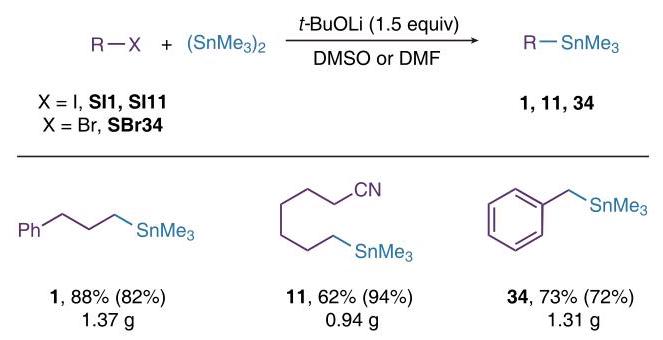
Figure 4. Gram-scale stannylation reactions. Reaction conditions: alkyl iodides SI1, SI11 (5.5 mmol, 1.0 equiv), hexamethyldistannane (1.1 equiv), t-BuOLi (1.5 equiv), DMSO (30 mL), 30 ${}^{ \circ }\mathrm{C}$ , 24 h; or alkyl bromides SBr34 (7 mmol, 1.0 equiv), hexamethyldistannane (1.05 equiv), t-BuOLi (1.5 equiv), DMF (30 mL), 30 ${}^{ \circ }\mathrm{C},4\mathrm{\;h},{\mathrm{\;N}}_{2}$ atmosphere. Isolated yield after column chromatography. The yields in parentheses refer to the reaction performed on a ${0.3}\mathrm{{mmol}}$ scale.
(a) Pd-catalyzed Stille coupling reaction of benzylstannane with bromobenzene
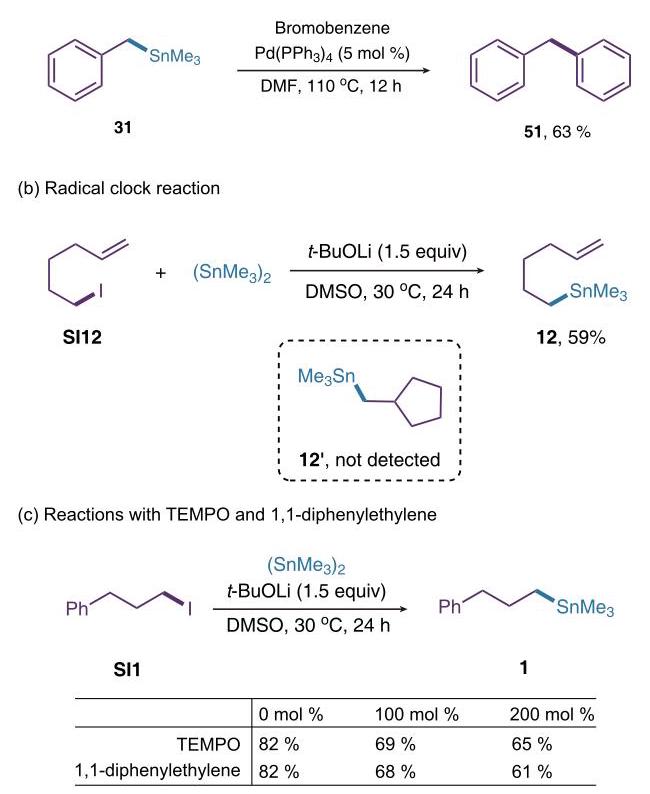
Figure 5. Derivatization of the stannylated substrate and mechanistic experiments.
Because it is not a free radical mechanism, the nucleophilic substitution reaction is the next reasonable assumption. With the help of density functional theory (DFT) calculations, we have restored a clear and detailed reaction pathway for this stannylation reaction (Figure 6). This indicated that the heterolysis of the Sn-Sn bond was the key step for the whole transformation. Initially, we assumed the ${\mathrm{{Li}}}^{ + }$ ion would react with hexamethyldistannane to generate a ${\mathrm{{Me}}}_{3}{\mathrm{{Sn}}}^{ + }$ ion or a $t$ - ${\mathrm{{BuO}}}^{ - }$ ion would react with hexamethyldistannane to generate a ${\mathrm{{Me}}}_{3}{\mathrm{{Sn}}}^{ - }$ ion, but we could not find a reasonable intermediate structure of these two transformations. Then we found the Sn-Sn bond heterolysis of hexamethyldistannane was a two-step process. First, the ${\mathrm{{Li}}}^{ + }$ ion will bond with hexamethyldis-tannane to afford INT1 with a slight energy decrease (-2.47 kcal/mol). Charge distribution analysis of INT1 using an atomic dipole moment-corrected Hirshfeld population (ADCH) method ${}^{43}$ showed the charge of two Sn atoms of INT1 was slightly different (see Scheme S1). We proposed the bonding of Li and Sn will weaken the Sn-Sn bond. Second, the $t - {\mathrm{{BuO}}}^{ - }$ ion reacted with INT1 to generate INT2 and INT3 via TS1. The transformation is favored both thermodynamically (the Gibbs free energy change is -22.44 kcal/mol) and kinetically (the activation energy is 20.96 kcal/ mol). The structure and charge analysis of TS1 indicated the Sn-Sn bond is stretched to 3.46 Å and the charge of two Sn atoms is significantly different (see Scheme S2). This showed that the $\mathrm{{Sn}} - \mathrm{{Sn}}$ bond is nearly broken. The dissociation of INT3 will afford the ${\mathrm{{SnMe}}}_{3}{}^{ - }$ ion. INT3 is a widely used nucleophile that will generate the ${\mathrm{{SnMe}}}_{3}{}^{ - }$ ion. Subsequently, an ${\mathrm{S}}_{\mathrm{N}}2$ reaction of ${\mathrm{{SnMe}}}_{3}{}^{ - }$ and halide takes place to give the desired product. The Gibbs free energy change is $- {35.36}\mathrm{{kcal}}/$ mol, and the activation energy is 17.18 kcal/mol. IRC analysis of TS2 also shows the ${\mathrm{S}}_{\mathrm{N}}2$ reaction characteristics (see Scheme S3). Finally, ${\mathrm{I}}^{ - }$ would be trapped by ${\mathrm{{Li}}}^{ + }$ to form LiI.
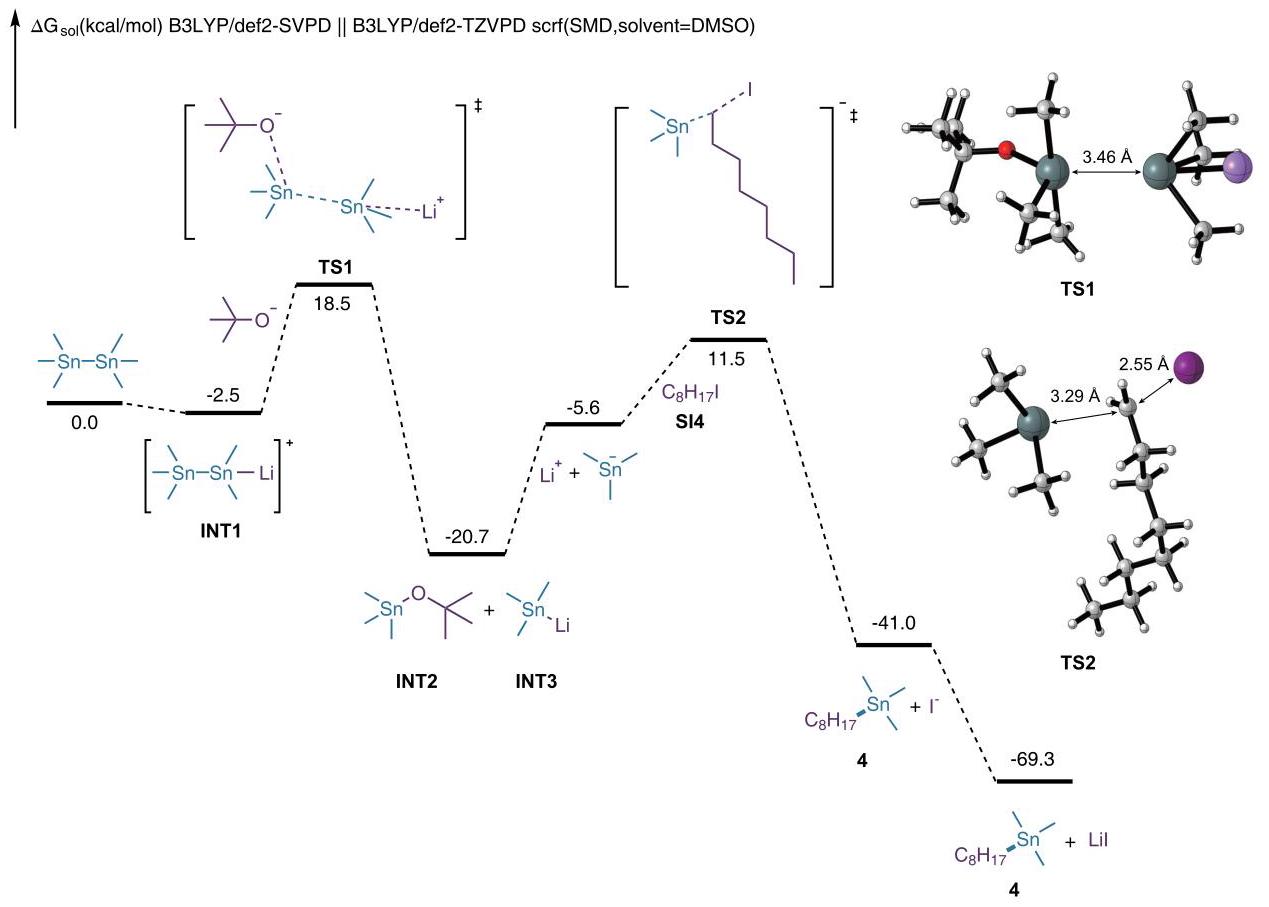
Figure 6. DFT calculations of the transition metal free stannylation reaction.
On the basis of the DFT calculation, we proposed the following mechanism (Figure 7). At first, the Sn-Sn bond of hexamethyldistannane is broken heterolytically by ${\mathrm{{Li}}}^{ + }$ and $t$ - ${\mathrm{{BuO}}}^{ - }$ to generate ${\mathrm{{Me}}}_{3}{\mathrm{{Sn}}}^{ - }$ and ${\mathrm{{Me}}}_{3}{\mathrm{{Sn}}}^{ + }$ simultaneously. The subsequent ${\mathrm{S}}_{\mathrm{N}}2$ reaction takes place to afford the desired product. In addition, compared with the stannylation of alkyl bromides, a small amount of DMAP is added. After a previous investigation, ${}^{38}$ we thought that the amino group in DMAP has a strong electron donating effect, which makes the pyridine nitrogen atom more nucleophilic, which can interact with the alkyl bromide involved in the reaction, thereby promoting cleavage of the carbon-bromide bond, and then complete the stannylation reaction efficiently.
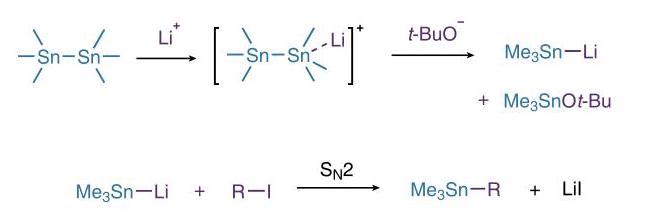
Figure 7. Proposed mechanism.
3. CONCLUSIONS
In summary, we have disclosed a transition metal free conversion of alkyl bromides or iodides into the corresponding alkyltin compounds using hexamethyldistannane as the tin source. This reaction features a wide substrate scope, a simple, convenient, and rapid transformation, and a successful gram-scale synthesis. Preliminary experimental and theoretical investigations reveal that an in situ-formed trimethylstannyl anion might be involved during this ${\mathrm{S}}_{\mathrm{N}}2$ type of stannylation reaction. On the basis of the DFT calculations, the lithium cation is hypothesized to promote the heterolysis of the $\mathrm{{Sn}} - \mathrm{{Sn}}$ bond. This research has opened a new avenue toward the synthesis of alkylstannanes from commercially available alkyl halides and ditin compounds.
ASSOCIATED CONTENT
(c) Supporting Information
The Supporting Information is available free of charge at https://pubs.acs.org/doi/10.1021/acs.joc.1c03135.
General experimental methods, ${}^{1}\mathrm{H}$ NMR spectra, ${}^{13}\mathrm{C}$ NMR spetra, and coordinates and energies for the calculated structures (PDF)
A UTHOR INFORMATION
Corresponding Authors
Di Qiu - Tianjin Key Laboratory of Structure and Performance for Functional Molecules, College of Chemistry, Tianjin Normal University, Tianjin 300387, China;
Fanyang Mo - School of Materials Science and Engineering, Peking University, Beijing 100871, China; (Corcid.org/ 0000-0002-4140-3020;
Authors
Songyi Li - Tianjin Key Laboratory of Structure and Performance for Functional Molecules, College of Chemistry, Tianjin Normal University, Tianjin 300387, China
Chang Lian - School of Materials Science and Engineering, Peking University, Beijing 100871, China
Guanglu Yue - Tianjin Key Laboratory of Structure and Performance for Functional Molecules, College of Chemistry, Tianjin Normal University, Tianjin 300387, China
Jianning Zhang - School of Materials Science and Engineering, Peking University, Beijing 100871, China
Complete contact information is available at: https://pubs.acs.org/10.1021/acs.joc.1c03135
Author Contributions
${}^{\text{ § }}$ S.L. and C.L. contributed equally to this work.
Notes
The authors declare no competing financial interest.
ACKNOWLEDGMENTS
The authors thank the Science & Technology Development Fund of Tianjin Education Commission for Higher Education (2020KJ007) and the National Natural Science Foundation of China (Grants 22071004, 21933001 and 22150013) for financial support.
ERFERENCES
(1) Neumann, W. P.; Moser, W. The organic chemistry of tin; Interscience: New York, 1970.
(2) Johansson Seechurn, C. C.; Kitching, M. O.; Colacot, T. J.; Snieckus, V. Palladium-catalyzed cross-coupling: a historical contextual perspective to the 2010 Nobel Prize. Angew. Chem., Int. Ed. 2012, 51, 5062-5085.
(3) Stille, J. K. The palladium-catalyzed cross-coupling reactions of organotin reagents with organic electrophiles [new synthetic methods (58)]. Angew. Chem., Int. Ed. 1986, 25, 508-524.
(4) Hassan, J.; Sévignon, M.; Gozzi, C.; Schulz, E.; Lemaire, M. Aryl-aryl bond formation one century after the discovery of the Ullmann reaction. Chem. Rev. 2002, 102, 1359-1470.
(5) Espinet, P.; Echavarren, A. M. The mechanisms of the Stille reaction. Angew. Chem., Int. Ed. 2004, 43, 4704-4734.
(6) Carsten, B.; He, F.; Son, H. J.; Xu, T.; Yu, L. Stille polycondensation for synthesis of functional materials. Chem. Rev. 2011, 111, 1493-1528.
(7) Murphy, A. R.; Liu, J.; Luscombe, C.; Kavulak, D.; Fréchet, J. M.; Kline, R. J.; McGehee, M. D. Synthesis, characterization, and field-effect transistor performance of carboxylate-functionalized polythio-phenes with increased air stability. Chem. Mater. 2005, 17, 4892- 4899.
(8) Kosugi, M.; Shimizu, Y.; Migita, T. Reaction of allyltin compounds: II. Facile preparation of allyl ketones via allyltins. J. Organomet. Chem. 1977, 129, C36-C38.
(9) Milstein, D.; Stille, J. K. A general, selective, and facile method for ketone synthesis from acid chlorides and organotin compounds catalyzed by palladium. J. Am. Chem. Soc. 1978, 100, 3636-3638.
(10) Kosugi, M.; Kato, Y.; Kiuchi, K.; Migita, T. Reaction of iodobenzene with trimethyltin cyanide in the presence of tetrakis (triphenylphosphine) palladium: New complex formation between the palladium and the cyanide. Chem. Lett. 1981, 10, 69-72.
(11) Kosugi, M.; Suzuki, M.; Hagiwara, I.; Goto, K.; Saitoh, K.; Migita, T. A new palladium catalyzed aromatic acetonylation by acetonyltributyltin. Chem. Lett. 1982, 11, 939-940.
(12) Labadie, J. W.; Stille, J. K. Mechanisms of the palladium-catalyzed couplings of acid chlorides with organotin reagents. J. Am. Chem. Soc. 1983, 105, 6129-6137.
(13) Falck, J.; Patel, P. K.; Bandyopadhyay, A. Stereospecific cross-coupling of $\alpha$ -(thiocarbamoyl) organostannanes with alkenyl, aryl, and heteroaryl iodides. J. Am. Chem. Soc. 2007, 129, 790-793.
(14) Li, L.; Wang, C.-Y.; Huang, R.; Biscoe, M. R. Stereoretentive Pd-catalysed Stille cross-coupling reactions of secondary alkyl azastannatranes and aryl halides. Nat. Chem. 2013, 5, 607-612.
(15) Andrianome, M.; Häberle, K.; Delmond, B. Allyl-and benzylstannanes, new reagents in terpenic synthesis. Tetrahedron 1989, 45, 1079-1088.
(16) Deline, J. E.; Miller, R. A facile preparation of benzyltrimethyl-stannanes and their utility in the synthesis of 1-benzyl-1,2- dihydroisoquinolines. Tetrahedron Lett. 1998, 39, 1721-1724.
(17) Baciocchi, E.; Ioele, M. Oxidation of benzyltrialkylstannanes by iodosylbenzene catalyzed by iron tetrakis(pentafluorophenyl)- porphyrin chloride. possible role of benzyloxy radicals. J. Org. Chem. 1995, 60, 5504-5508.
(18) Tipparaju, S. K.; Joyasawal, S.; Forrester, S.; Mulhearn, D. C.; Pegan, S.; Johnson, M. E.; Mesecar, A. D.; Kozikowski, A. P. Design and synthesis of 2-pyridones as novel inhibitors of the Bacillus anthracis enoyl-ACP reductase. Bioorg. Med. Chem. Lett. 2008, 18, 3565-3569.
(19) Cheng, Z.; Skouta, R.; Vazquez, H.; Widawsky, J. R.; Schneebeli, S.; Chen, W.; Hybertsen, M. S.; Breslow, R.; Venkataraman, L. In situ formation of highly conducting covalent Au-C contacts for single-molecule junctions. Nat. Nanotechnol. 2011, 6, 353-357.
(20) Davies, A. G.; Roberts, B. P.; Smith, J. M. Homolytic organometallic reactions. Part VIII. Kinetics of the homolytic reaction between N-halogenosuccinimides and tetra-alkyltins. J. Chem. Soc., Perkin Trans. 2 1972, 2, 2221-2224.
(21) Marton, D.; Russo, U.; Stivanello, D.; Tagliavini, G.; Ganis, P.; Valle, G. C. Preparation of benzylstannanes by zinc-mediated coupling of benzyl bromides with organotin derivatives. Physicochemical characterization and crystal structures. Organometallics 1996, 15, 1645-1650.
(22) Smith, G. F.; Kuivila, H. G.; Simon, R.; Sultan, L. Electron-transfer, halogen-metal exchange, and direct processes in formal nucleophilic substitutions on alkyl halides by trimethyltinsodium. J. Am. Chem. Soc. 1981, 103, 833-839.
(23) Lamandé-Langle, S.; Abarbri, M.; Thibonnet, J.; Duchêne, A. A novel mode of access to polyfunctional organotin compounds and their reactivity in Stille cross-coupling reaction. J. Organomet. Chem. 2009, 694, 2368-2374.
(24) Jiang, J.; Crabtree, R. H.; Brudvig, G. W. One-step trimethylstannylation of benzyl and alkyl halides. J. Org. Chem. 2016, 81, 9483-9488.
(25) Doyle, M. P.; Taunton, J.; Oon, S.-M.; Liu, M. T.; Soundararajan, N.; Platz, M. S.; Jackson, J. E. Reactivity and selectivity in intermolecular insertion reactions of chlorophenylcar-bene. Tetrahedron Lett. 1988, 29, 5863-5866.
(26) Jackson, J. E.; Soundararajan, N.; Platz, M. S.; Doyle, M. P.; Liu, M. T. Activation parameters for the reaction of phenylchloro carbene with pyridine, tri-n-butyltin hydride, and triethylsilane; evidence against the need to invoke reversibly formed complexes in the reaction of this carbene with olefins. Tetrahedron Lett. 1989, 30, 1335-1338.
(27) Andrey, O.; Landais, Y.; Planchenault, D.; Weber, V. Synthesis of $\alpha$ -(Alkoxysilyl) acetic esters. A route to 1,2 diols. Tetrahedron 1995, 51, 12083-12096.
(28) Liu, Z.; Li, Q.; Yang, Y.; Bi, X. Silver (I)-promoted insertion into X-H (X= Si, Sn, and Ge) bonds with N-nosylhydrazones. Chem. Commun. 2017, 53, 2503-2506.
(29) Leusink, A.; Noltes, J. G. Mechanism of the hydrostannation of acrylonitrile. Tetrahedron Lett. 1966, 7, 335-340.
(30) Fleming, I.; Urch, C. J. Stereospecific cyclopropane synthesis from $\gamma$ -stannyl alcohols. J. Organomet. Chem. 1985, 285, 173-191.
(31) Smith, N. D.; Mancuso, J.; Lautens, M. Metal-catalyzed hydrostannations. Chem. Rev. 2000, 100, 3257-3282.
(32) Azizian, H.; Eaborn, C.; Pidcock, A. Synthesis of organo-trialkylstannanes. The reaction between organic halides and hexaalkyldistannanes in the presence of palladium complexes. J. Organomet. Chem. 1981, 215, 49-58.
(33) Kashin, A. N.; Bumagina, I. G.; Bumagin, N. A.; Bakunin, V. N.; Beletskaya, I. P. The reactions of organometallic compounds, catalyzed by complexes of transition-metals 0.2 . the formation of tin-carbon bond in hexamethyldistannane reactions with organic halides, catalyzed by palladium complexes. Russ. J. Org. Chem. 1981, 17, 789-794.
(34) Qiu, D.; Wang, S.; Meng, H.; Tang, S.; Zhang, Y.; Wang, J. Synthesis of benzyltributylstannanes by the reaction of N-tosylhy-drazones with ${\mathrm{{Bu}}}_{3}\mathrm{{SnH}}$ . J. Org. Chem. 2017, 82, 624-632.
(35) Friese, F. W.; Studer, A. New avenues for C-B bond formation via radical intermediates. Chem. Sci. 2019, 10, 8503-8518.
(36) Liu, Q.; Zhang, L.; Mo, F. Organic borylation reactions via radical mechanism. Acta Chim. Sin. 2020, 78, 1297-1308.
(37) Liu, Q.; Hong, J.; Sun, B.; Bai, G.; Li, F.; Liu, G.; Yang, Y.; Mo, F. Transition-metal-free borylation of alkyl iodides via a radical mechanism. Org. Lett. 2019, 21, 6597-6602.
(38) Zhang, L.; Jiao, L. Visible-light-induced organocatalytic borylation of aryl chlorides. J. Am. Chem. Soc. 2019, 141, 9124-9128.
(39) Kuivila, H. G. Organotin hydrides and organic free radicals. Acc. Chem. Res. 1968, 1, 299-305.
(40) Barton, D. H. R.; Dowlatshahi, H. A.; Motherwell, W. B.; Villemin, D. A new radical decarboxylation reaction for the conversion of carboxylic acids into hydrocarbons. J. Chem. Soc., Chem. Commun. 1980, 732-733.
(41) Ingold, K. U.; Bowry, V. W. Why are organotin hydride reductions of organic halides so frequently retarded? kinetic studies, analyses, and a few remedies. J. Org. Chem. 2015, 80, 1321-1331.
(42) Juliá, F.; Constantin, T.; Leonori, D. Applications of halogen-atom transfer (XAT) for the generation of carbon radicals in synthetic photochemistry and photocatalysis. Chem. Rev. 2022, 122, 2292- 2352.
(43) Lu, T.; Chen, F. Atomic dipole moment corrected Hirshfeld population method. J. Theor. Comput. Chem. 2012, 11, 163-183.
CAS BIOFINDER DISCOVERY PLATFORM™
ELIMINATE DATA SILOS. FIND WHAT YOU NEED, WHEN YOU NEED IT.
A single platform for relevant, high-quality biological and toxicology research
Streamline your R&D
CAS