New developments in aromatic halogenation, borylation, and cyanation
中文 / Bilingual · English version
Di Qiu, Fanyang Mo, Zhitong Zheng, Yan Zhang, and Jianbo Wang*
Abstract: Several green procedures have been developed for synthesizing functionalized aromatics: i) AuCl ${}_{3}$ - catalyzed halogenation of aromatic compounds, including aryl boronates; ii) ${\mathrm{{Fe}}}_{2}{\mathrm{O}}_{3}$ -catalyzed direct aromatic C-H bond borylation; iii) Pd-catalyzed direct cyanation of indoles; iv) direct conversion of arylamines to pinacol boronates.
Keywords: Au-catalyzed $\cdot$ Borylation $\cdot$ Cyanation $\cdot$ Fe-catalyzed $\cdot$ Green chemistry $\cdot$ Halogenation $\cdot$ Metal-free reactions

Di Qiu was born in Tianjin, China. He received his B.Sc. degree from Peking University in 2009. He is now a graduate student in Prof. Jianbo Wang’s laboratory. His current research projects are focused on gold-catalyzed $\mathrm{C} - \mathrm{H}$ bond functionalization.
Fanyang Mo was born in Liaoning Province, China in 1982. He received his B.Sc. and M.Sc. degrees from Beijing Institute of Technology (P. R. of China) in 2004 and 2006 under the supervision of Professor Zhiming Zhou. He then obtained his Ph.D. from Peking University, under the supervision of Prof. Jianbo Wang. He is currently a postdoctoral fellow at the Scripps Research Institute.
Zhitong Zheng was born in Beijing, China in 1990. He was enrolled in Peking University in 2008. He is currently working in Prof. Jianbo Wang’s laboratory and is expecting to obtain his B.Sc. degree in 2012.

Yan Zhang was born in Shandong province, China in 1975. She received her B.Sc. and Ph. D. degrees from Lanzhou University. She continued her research as a postdoctoral fellow in Hong Kong University of Science and Technology (2002-2004), University of Innsbruck & Leibniz Institute of Surface Modification (IOM) e. V. (2004-2005), University of Missouri-St. Louis (2005-2006), and Auburn University (2006-2008). She joined Peking University in 2008 as an associate professor. Her research focuses on the application of transition metal complexes of $\mathbf{N}$ -heterocyclic carbenes and synthesis of small biological compounds. B.Sc. degree from Nanjing University of Science and Technology in 1983, and his Ph.D. from Hokkaido University (under the supervision of Prof. H. Suginome) in 1990. He was a postdoctoral associate at the University of Geneva from 1990 to 1993 (with Prof. C. W. Jefford), and University of Wisconsin-Madison from 1993 to 1995 (with Prof. H. E. Zimmerman and F. A. Fahien). He began his independent academic career at Peking University in 1995. His research interests include the catalytic metal carbene transformations.

Jianbo Wang was born in Zhejiang province, China in 1962. He received his
1. Introduction
The development of new methods to functionalize inert chemical bonds, such as aromatic carbon-hydrogen (C-H) and carbon-nitrogen (C-N) bonds, is highly important because these methods can serve as the bridge that links cheap and readily available materials to valuable and useful products. Mild, efficient and sustainable transformations of this type will undoubtedly find widespread applications across nearly every branch of chemical fields, including the synthesis of pharmaceuticals, natural products, agrochemicals, polymers, and feedstock commodity chemicals. As part of our ongoing research program on the development of practical transformations towards functionalized aromatic compounds, we have focused our efforts on maximally meeting the request of green chemistry. In this context, we have been interested in using metal catalysts (Au, Fe and Pd) to facilitate the conversion of aromatic C-H bonds into carbon-halogen (C-X, X = Cl, Br, I), carbon-boron (C-B) and carbon-carbon (C-C) bonds, respectively. ${}^{\left\lbrack 1 - 4\right\rbrack }$ We have also developed a metal-free borylation process that converts arylamines to arylboronates. ${}^{\left\lbrack 5\right\rbrack }$ This review briefly summarizes our recent studies.
*Correspondence: Prof. J. Wang
Beijing National Laboratory of Molecular Sciences (BNLMS)
and Key Laboratory of Bioorganic Chemistry and
Molecular Engineering of Ministry of Education
College of Chemistry, Peking University
Beijing 100871, China
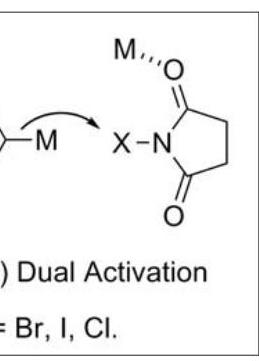
$A =$ acid, $M =$ metal, and $X = {Br}, I,{CI}$ .
2. Gold(iii)-catalyzed Halogenation of Arenes
Halogenation of aromatic compounds is one of the essential and frequently used reactions in both industrial and academic settings. The commonly used halogenating reagents in laboratories are $N$ -bromo-, $N$ -iodo-, and $N$ -chlorosuccinimide (NBS, NIS, and NCS, respectively) owing to their ease of handling, as well as the generation of relatively inert succinimide as the byproduct. Previous studies have focused primarily on enhancing the halogenating ability of NXS (X = Br, I, Cl) by using Lewis acid catalyst, which activates the carboxyl group (Scheme 1a). ${}^{\left\lbrack 6 - 8\right\rbrack }$ However, the catalysts used are in most cases not sufficiently efficient, and high catalyst loading (10% to one equivalent) is required in many cases. Lewis acid is used as solvent in particular cases. Consequently, there is still great need to develop a practical procedure for the efficient halogenation of aromatic compounds under milder reaction conditions.
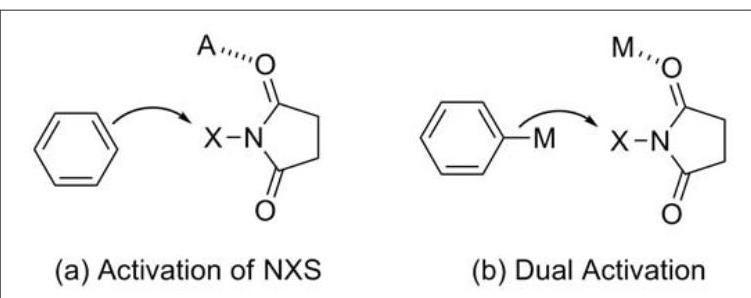
Since previous studies have already focused on the activation of the halogenating source, we therefore conceive that the activation of arene substrates may provide an alternative mode of activation with the potential of increased catalytic efficiency. A dual activation process as shown in Scheme 1b is thus proposed, which involves the activation of the $N$ -halosuccinimide by gold catalyst on one hand, and direct auration of the arene substrate on the other hand. We have observed that gold(III) catalyst demonstrates unique catalytic properties in halogenations, while the use of other acids in this system, such as ${\mathrm{{FeCl}}}_{3},{\mathrm{{FeBr}}}_{3},{\mathrm{{BF}}}_{3} \cdot {\mathrm{{OEt}}}_{3}$ (commonly used to activate $N$ -halosuccinimide), ${\mathrm{{NH}}}_{4}{\mathrm{{NO}}}_{3}$ and ${\mathrm{{ZrCl}}}_{4}$ , give substantially lower yields. ${}^{\left\lbrack 1\right\rbrack }$
${\mathrm{{AuCl}}}_{3}$ -catalyzed halogenation has wide substrate scope, including aromatic substrates bearing moderately electron-withdrawing substituents (Scheme 2). In the cases of electron-rich arenes, not only bromination, but also chlorination can be achieved. The regioselectivity of the reaction is dominated by the electronic properties of the substituents. Halogenation with electron-rich arenes provides high yields genation process. ${}^{\left\lbrack {20}\right\rbrack }$ For this purpose, we have further extended the ${\mathrm{{AuCl}}}_{3}$ -catalyzed halogenation reaction by employing aryl-boronates as substrates (Scheme 3).[2]
Scheme 1. Halogenation through dual activation.
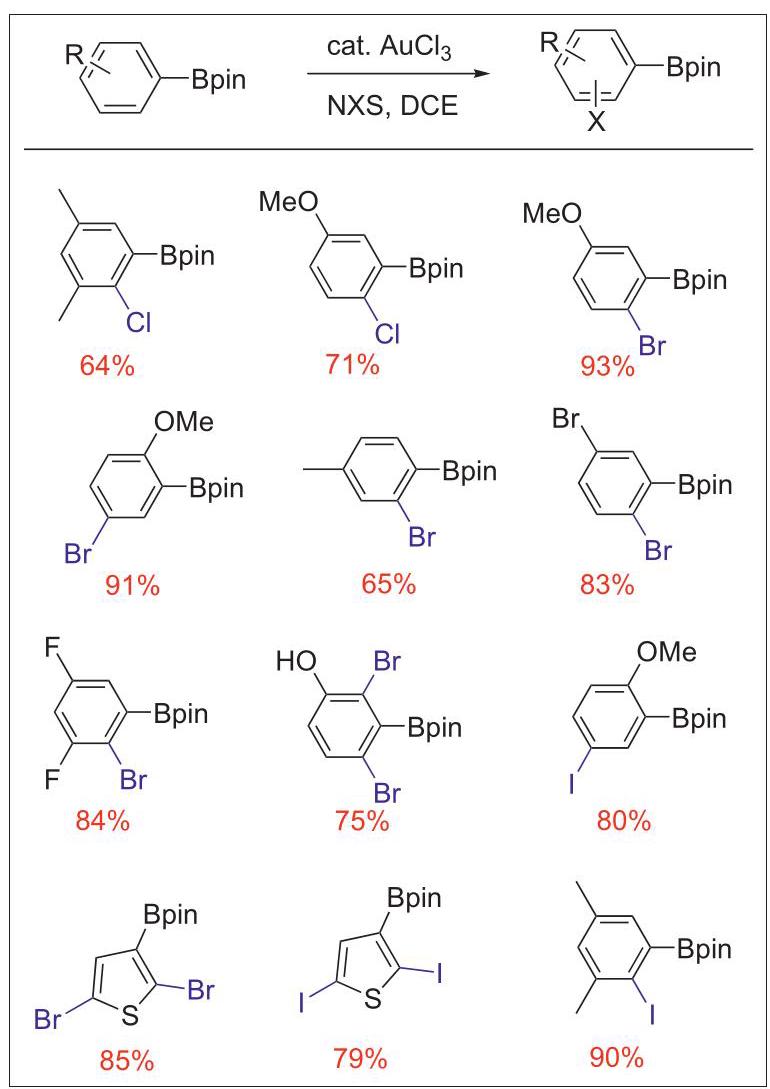
A variety of arylboronates substances have been subjected to ${\mathrm{{AuCl}}}_{3}$ -catalyzed halogenations. The results show that ${\mathrm{{AuCl}}}_{3}$ catalyzes a wide range of arylboronates, including those bearing heterocyclic rings. The substituent group can be halogen, methyl, methoxy, trifluoromethoxy, and under mild conditions with very low catalyst loading (down to 0.01 mol %). Arenes bearing moderately electron-withdrawing groups require higher catalyst loading and longer reaction times. Unfortunately, aromatic substrates bearing strongly electron-withdrawing groups, such as nitro group, are not reactive. The nearly quantitative yields and the clean reaction system with only succinimide as by-product make this reaction very attractive as a preparative method.
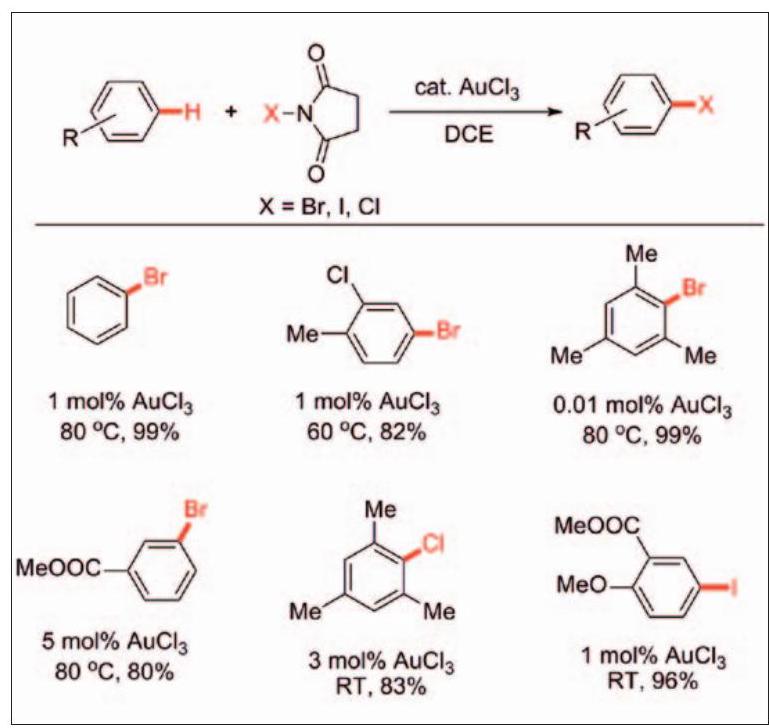
Scheme 2. ${\mathrm{{AuCl}}}_{3}$ -catalyzed halogenation.
In recent years, considerable attention has been paid to functionalized arylboronic compounds due to their usefulness in organic synthesis and other fields. ${}^{\left\lbrack 9 - {14}\right\rbrack }$ Aryl-boronic acids and esters bearing halogen atom are extraordinary valuable because they afford the possibility to construct complex molecules by conducting multiple-step cross-coupling reactions. ${}^{\left\lbrack {15},{16}\right\rbrack }$ In general, the halogenation conditions are too harsh for aromatic boronates, because deborylation occurs very easily under the conventional halogenation conditions. ${}^{\left\lbrack {17} - {19}\right\rbrack }$ Therefore, it is necessary to develop methodology to achieve halogenation of aromatic boron compounds under mild conditions so that the boron group can remain intact during the halo-hydroxyl group. The reaction provides the corresponding halogenation products in good to excellent yields with the retention of the boron group. Interestingly, most of these halogenated boronates are unknown compounds, which may reflect the difficulties associated with the traditional method in preparing such functionalized aromatic boronates.
While exploring the ${\mathrm{{AuCl}}}_{3}$ -catalyzed halogenation of arylboronates, we were puzzled by an intriguing question: how does the boronate group affect the halogenation activity and regioselectivity. We have investigated this issue by comparing the halogenation of benzene and pinacol phenylboronate under identical conditions. The experiments suggest that the pinacol boronate group is a weakly activating and ortho/para-directing group (Scheme 4). This may be due to a smaller value of electronegativity than that of carbon (2.04 versus 2.55), resulting in the inductive effect of boron being electron-donating. On the other hand, since boron has an empty $p$ -orbital, the resonance effect is electron-withdrawing, which is opposite to its inductive effect. However, the boron may be complexed with a Lewis base (such as carbonyl oxygen of succinimide) in the reaction system, which may counteract the electron-withdrawing effect.[21]
In addition, to demonstrate the utility of the halogenated boronates, we have carried out experiments of consecutive Suzuki-Miyaura coupling reactions to demonstrate the rapid construction of aromatic compounds with complex structure (Scheme 5).
As shown in Scheme 5, we have demonstrated that ${\mathrm{{AuCl}}}_{3}$ is an extraordinarily efficient catalyst for aromatic halogenation. In particular, arylboronates can be halogenated with the retention of the catalyst loading, mild high catalytic efficie and the compatibility transformations m potentially useful in t halides.
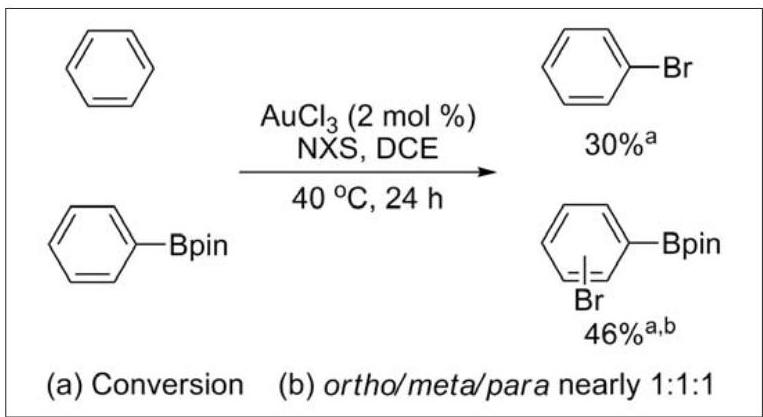
Scheme 4. Comparison of the reactivity in ${\mathrm{{AuCl}}}_{3}$ -catalyzed bromination.
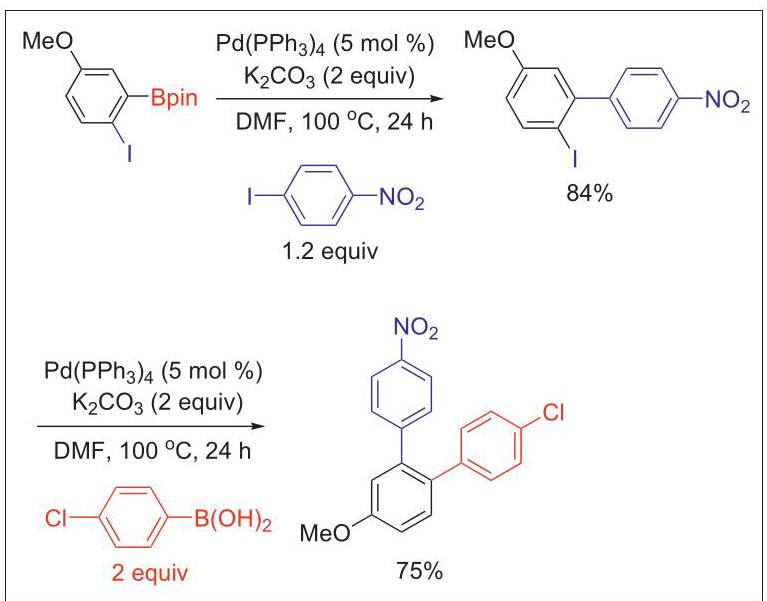
Scheme 5. Applications of halogenated boronates in consecutive coupling reactions.
Scheme 3. Au(iii)-catalyzed halogenation of arylboronates.
3. Iron-catalyzed Direct Borylation of Arenes
Borylation via C-H bond activation attracts great attention because of high efficiency as well as atom economy.[22] Direct borylation of arenes via C-H bond activation have been reported by several groups in recent years, ${}^{\left\lbrack {23}\right\rbrack }$ however, all of them utilize noble metal, such as iridium or rhodium. The application of inexpensive and nontoxic catalyst in such transformations is obviously more attractive and reflects the trend of green chemistry. In 2010, we published the primary results of an iron-catalyzed direct borylation of arenes (Scheme 6).[3]
Among various iron catalysts, ${\mathrm{{Fe}}}_{2}{\mathrm{O}}_{3}$ shows the highest catalytic activity. Nano- ${\mathrm{{Fe}}}_{2}{\mathrm{O}}_{3}$ slightly increases the yields, presumably due to the fact that nanoscale heterogeneous catalysts have more surface area and consequently have enhanced catalytic activity. The substrate scope has been investigated under the optimized conditions (Scheme 6). The borylation of anisole gives a mixture of products of ortho, meta and para substitution, in which ortho-borylated product predominates. This selectivity is consistent with traditional electrophilic aromatic substitution reactions. In contrast, the regioselectivity of Rh- and Ir-catalyzed borylation of arenes is controlled by steric effect of the substit-uents. For methyl-substituted arenes, only aromatic C-H bonds are functionalized under these conditions. the retention of the boron group. Low catalyst loading, mild reaction conditions, high catalytic efficiency, easy separation, and the compatibility of direct subsequent transformations make this method potentially useful in the preparation of aryl halides.
Although the efficiency of this nano- ${\mathrm{{Fe}}}_{2}{\mathrm{O}}_{3}$ -catalyzed system still needs to be improved, it opens up new possibilities to develop direct aromatic borylation with inexpensive iron catalysts.
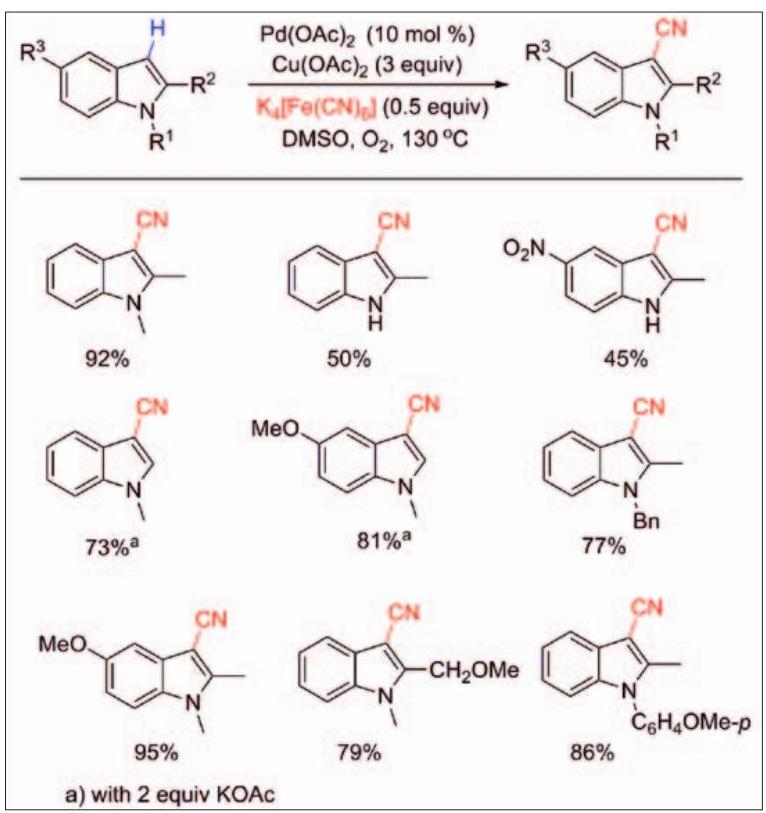
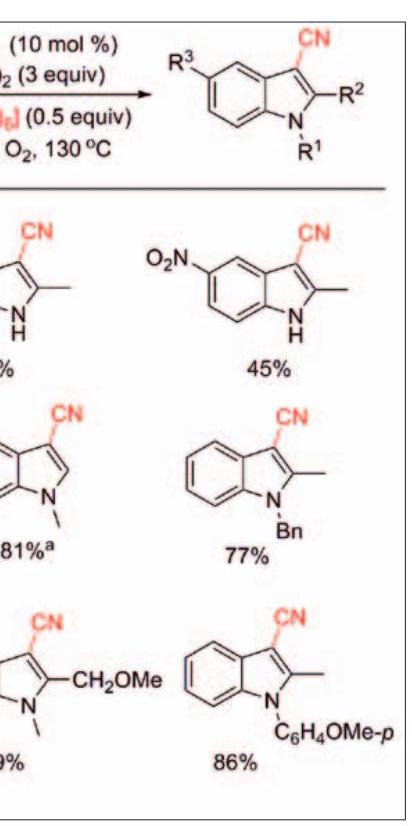
Scheme 7. Palladium-catalyzed direct cyanation of indoles.
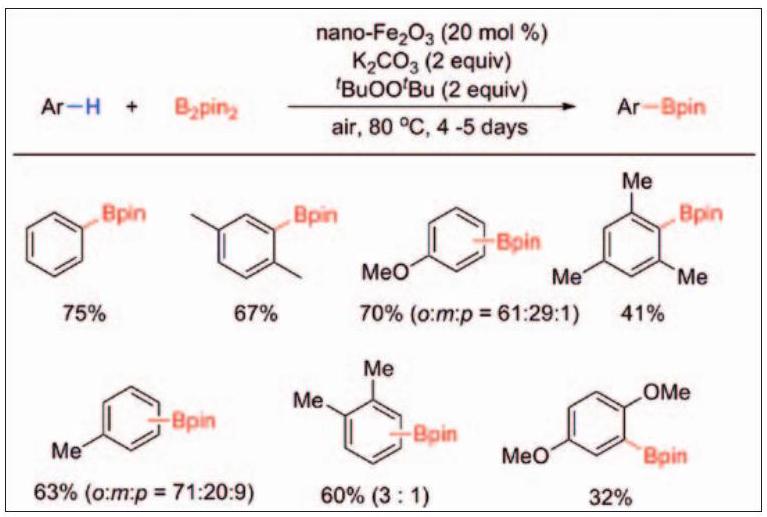
Scheme 6. Iron-catalyzed direct borylation of arenes.
4. Palladium-catalyzed Direct Cyanation of Indoles
Aryl nitriles have found wide application, especially in the fields of pharmacy and agriculture. They are also important intermediates in organic synthesis. Traditional approaches for the preparation of aromatic cyanides rely on functional group transformation, such as the Sandmeyer reaction[24] and the Rosenmund-von Braun reaction.[25] Recently, transition-metal-catalyzed cyan-ation of aryl halides has emerged as a use -ful method for preparing aromatic cyanides. ${}^{\left\lbrack {26} - {29}\right\rbrack }$ Compared with the traditional transformations, the direct cyanation of C-H bond is much more attractive in terms of step, atom and redox economy. While some achievements have been made in this arena by employing a directing group,[30-32] more general aromatic cyanation through direct C-H bond activation remains a challenging task. In 2010, we reported the first Pd-catalyzed direct cyanation of indoles (Scheme 7). ${}^{\left\lbrack 4\right\rbrack }$
In this reaction, ${\mathrm{K}}_{4}\left\lbrack {\mathrm{{Fe}}{\left( \mathrm{{CN}}\right) }_{6}}\right\rbrack$ is used as the cyano source and offers the advantage of nontoxicity. Equivalent copper and oxygen are used as the terminal oxidants. The only by-product in this Pd-catalyzed cyanation is derived from homocoupling of indole at the C(2) and C(3) positions. We found that addition of potassium acetate (KOAc) in the system could dramatically suppress the homocoupling. Besides, the substituents on pyrrole ring of the indoles significantly affect the reaction. Electron-withdrawing groups either on $\mathrm{C}\left( 2\right)$ or on nitrogen completely deactivate the indole substrate toward cyanation, while electro-donating groups seem to promote the cyanation reaction. On the contrary, the electronic nature of substituents on the benzene ring of the indoles has relatively less effect on the cyanation.
5. Direct Conversion of A to Arylboronates
Arylboronic compounds wide application in organi particularly for the Suzuki-Mi coupling reaction. ${}^{\left\lbrack 9,{10}\right\rbrack }$ This ha increasing demand for various and esters from both academia The traditional method fo arylboronic acid is by the reaction of Grignard reagent reagents with $\mathrm{B}{\left( \mathrm{{OMe}}\right) }_{3}.{}^{\left\lbrack {33},{34}\right\rbrack }A$ method is widely practiced, t] is also apparent: anhydrous and poor functional group to development of alternative methods has continued over 1 1995, Miyaura and co-work the palladium-catalyzed bory aryl halides. ${}^{\left\lbrack {35}\right\rbrack }$ More recently, have been directed toward tl metal-catalyzed direct bo aromatic C-H bonds. ${}^{\left\lbrack {22}\right\rbrack }$
All of these approaches req the transformations, either as as stoichiometric reagents. Th contaminate the final boron cause environmental probler scale production. In 2010, we metal-free direct conversion of to arylboronic pinacol este temperature (Scheme 8).[5] transformation follows a type reaction sequence: the is first converted into the co diazonium ion by reaction wi nitrite, and then the diazoniu e diboron reagent ${\mathrm{B}}_{2}{\mathrm{{pin}}}_{2}$ to deliver Il product.
rect cyanation of indoles.
ariety of arylamines are subjected optimized reaction conditions. All ylation reactions complete at room ature within two hours, and afford responding products with good to nt yields. Reaction with substrates either an electron-donating group lectron-withdrawing group affords esponding boronates in good yields. er, for some ortho-substituted ines the reaction only results in roduct. These results demonstrate reaction is significantly subject to nd electronic effects.
advantages of this novel rmation could be summarized as : First, compared with aryl halides, ines are generally cheap and largely le. Secondly, the metal-free process unnecessary metal contamination in ts. Thirdly, the reaction condition is t of ambient air and moisture. All of low this method to be an alternative ant method for arylboronates is.
Iclusion
ummary, we have developed several
efficient and environmentally transformations that convert cheap sily available starting materials inctionalizing aromatics. These rmations have the potential to be oth in academic laboratories and in industry. Further exploration of green procedures is currently undergoing in our laboratory.
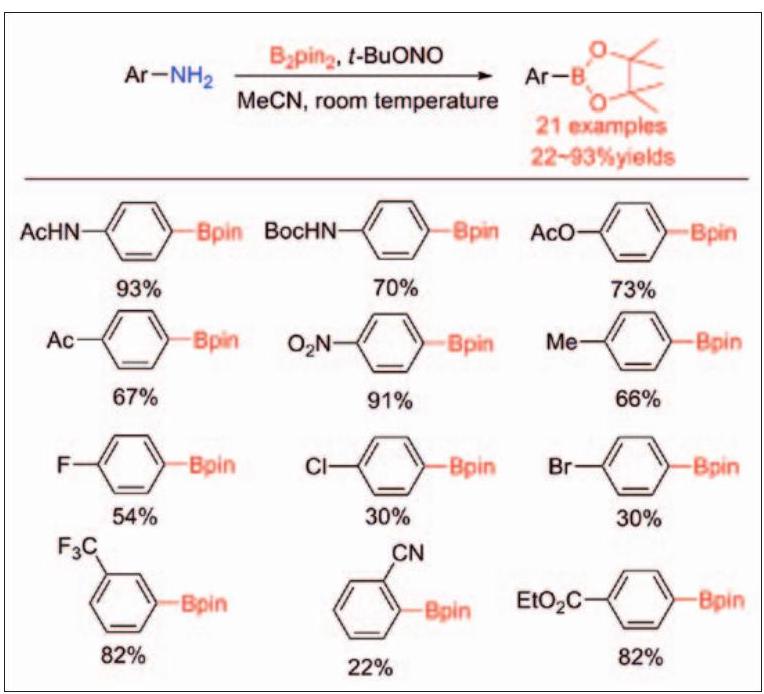
Scheme 8. Direct borylation of arylamines.
Acknowledgements
The research presented in this article has been supported by 973 Program (No. 2009CB825300) and the NSFC (Grant No. 20902005, 20832002, 21072009, 20821062).
Received: September 25, 2011
[1] F. Mo, J. M. Yan, D. Qiu, F. Li, Y. Zhang, J. Wang, Angew. Chem. Int. Ed. 2010, 49, 2028.
[2] D. Qiu, F. Mo, Z. Zheng, Y. Zhang, J. Wang, Org. Lett. 2010, 12, 5474.
[3] G. Yan, Y. Jiang, C. Kuang, S. Wang, H. Liu, Y. Zhang, J. Wang, Chem. Commun. 2010, 46, 3170.
[4] G. Yan, C. Kuang, Y. Zhang, J. Wang, Org. Lett. 2010, 12, 1052.
[5] F. Mo, Y. Jiang, D. Qiu, Y. Zhang, J. Wang, Angew. Chem. Int. Ed. 2010, 49, 1846.
[6] For a recent example of halogenation of activated aromatics with NXS see: E. Zysman-Colman, K. Arias, J. S. Siegel, Can. J. Chem. 2009, 87, 440.
[7] For an example of halogenation of unactivated aromatics with NXS see: G. K. S. Prakash, T. Mathew, D. Hoole, P. M. Esteves, Q. Wang, G. Rasul, G. A. Olah, J. Am. Chem. Soc. 2004, 126, 15770.
[8] For an example of transition metal catalyzed halogenation with NXS see: X.-B. Wan, Z.-X. Ma, B.-J. Li, K.-Y. Zhang, S.-K. Cao, S.-W. Zhang, Z.-J. Shi, J. Am. Chem. Soc. 2006, 128, 7416.
[9] A. Suzuki, Acc. Chem. Res. 1982, 15, 178.
[10] N. Miyaura, A. Suzuki, Chem. Rev. 1995, 95, 2457.
[11] N. Miyaura, Top. Curr. Chem. 2002, 219, 11.
[12] N. Miyaura, J. Organomet. Chem. 2002, 653, 54.
[13] N. Miyaura, Bull. Chem. Soc. Jpn. 2008, 81, 1535.
[14] D. G. Hall, ‘Boronic Acids’, Wiley, New York, 2005.
[15] C. Wang, F. Glorius, Angew. Chem. Int. Ed. 2009, 48, 5240.
[16] M. Tobisu, N. Chatani, Angew. Chem. Int. Ed. 2009, 48, 3565.
[17] A. L. S. Thompson, G. W. Kabalka, M. R. Akula, J. W. Huffman, Synthesis 2005, 547.
[18] J. M. Murphy, X. Liao, J. F. Hartwig, J. Am. Chem. Soc. 2007, 129, 15434.
[19] H. Wu, J. Hynes, Jr. Org. Lett. 2010, 12, 1192.
[20] R. M. Al-Zoubi, D. G. Hall, Org. Lett. 2010, 12, 2480.
[21] C. D. Entwistle, T. B. Marder, Chem. Mater. 2004, 16, 4574.
[22] I. A. I. Mkhalid, J. H. Barnard, T. B. Marder, J. C. Murphy, J. F. Hartwig, Chem. Rev. 2010, 110, 890.
[23] For a recent example, see: P. Harrison, J. Morris, P. G. Steel, T. B. Marder, Synlett 2009, 147.
[24] T. Sandmeyer, Ber. Dtsch. Chem. Ges. 1884, 17, 1633.
[25] K. W. Rosenmund, E. Struck, Ber. Dtsch. Chem. Ges. 1919, 2, 1749.
[26] Y. Ren, Z. Liu, S. Zhao, X. Tian, W. Yin, S. He, J. Wang, Catal. Commun. 2009, 10, 768.
[27] Y. Ren, W. Wang, S. Zhao, X. Tian, J. Wang, W. Yin, L. Cheng, Tetrahedron Lett. 2009, 50, 4595.
[28] S. Velmathi, N. E. Leadbeater, Tetrahedron Lett. 2008, 50, 4693.
[29] F. G. Buono, R. Chidambaram, R. H. Mueller, R. E. Waltermire, Org. Lett. 2008, 10, 5325.
[30] X. Chen, X. S. Hao, C. E. Goodhue, J.-Q. Yu, J. Am. Chem. Soc. 2006, 128, 6790.
[31] X. Jia, D. Yang, S. Zhang, J. Cheng, Org. Lett. 2009, 11, 4716.
[32] X. Jia, D. Yang, W. Wang, F. Luo, J. Cheng, J. Org. Chem. 2009, 74, 9470.
[33] H. C. Brown, M. Srebnik, T. E. Cole, Organometallics 1986, 5, 2300.
[34] H. C. Brown, T. E. Cole, Organometallics 1983, 2, 1316.
[35] T. Ishiyama, M. Murata, N. Miyaura, J. Org. Chem. 1995, 60, 7508.